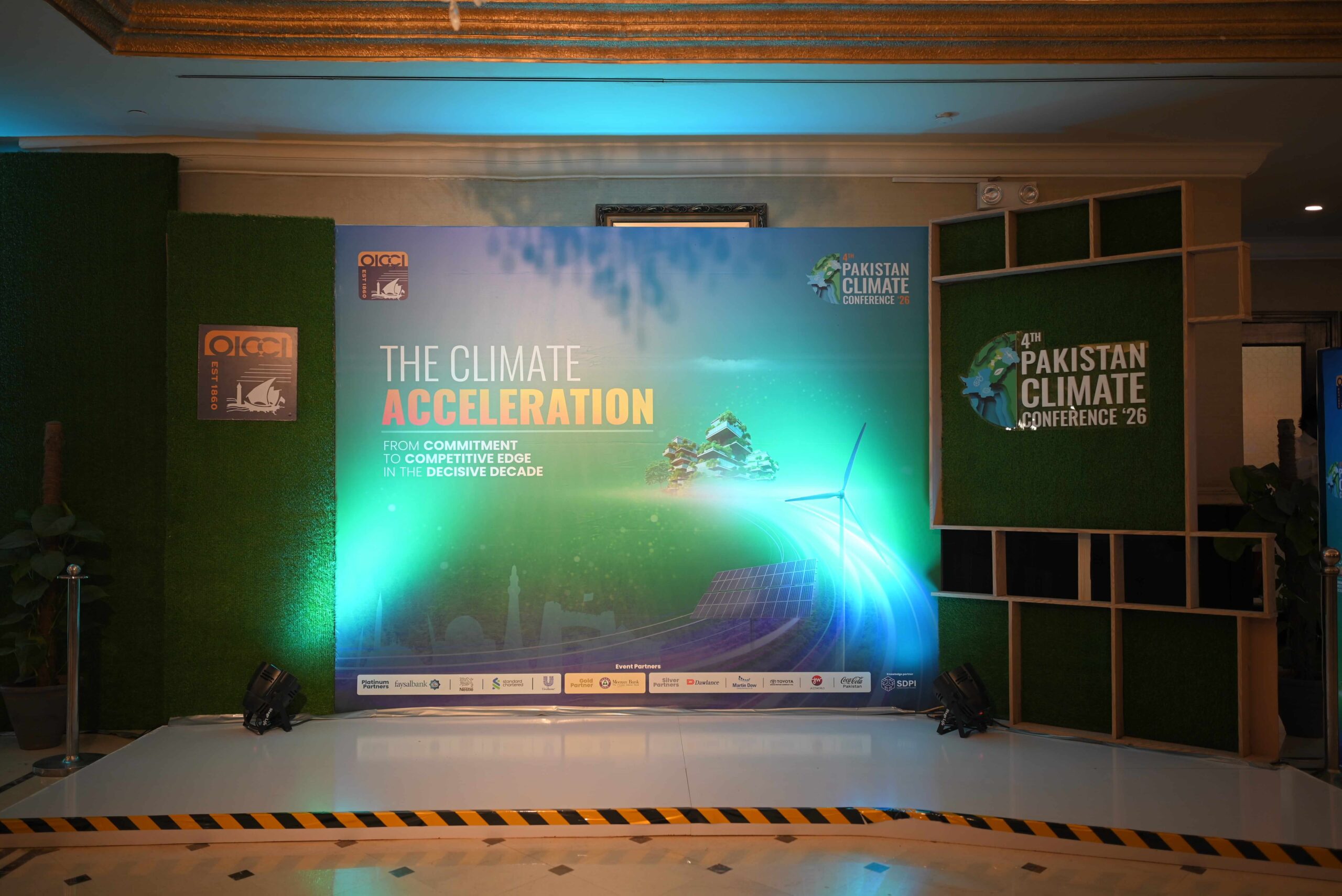
4th Pakistan Climate Conference: Need for Urgent Action & Forging the Path Towards it
Despite contributing less than 1% to global emission, Climate Change Minister Musadik Malik said in his speech, Pakistan faces disproportionate effects of climate change. From record heatwaves, the melting of over 13,000 glaciers, and infrastructure destruction, to devastating floods resulting in over 6000 deaths and more than 40 million displaced people in recent years, the country is left with deep emotional and financial scars. Pakistan loses almost 1% of its GDP every year due to such damages. He elaborated on how Pakistan achieves growth rates of 3 to 4%, just for floods to cause damages close to 10% of GDP, significantly setting back progress made.
With Pakistan revealing its revised Nationally Determined Contributions (NDC) 3.0 at COP30, with the target of reducing emissions by half by 2035, a massive investment of approximately $565.7 Billion is required, highlighting the mammoth challenge that lies ahead. And indeed, a massive overhaul is needed as Pakistan bears witness to increasingly worsening effects of climate change.
Finance Minister Muhammad Aurangzeb highlighted Pakistan’s precarious position, detailing how the 2022 floods were mostly confined to one river system and two provinces, but the 2025 floods wreaked havoc across all provinces and three river systems.
In his recorded message, Aurangzeb highlighted the introduction of frameworks such as the National Adaptation Plan, Climate Prosperity Plan and green taxonomy to show initiatives taken from the policy side, asserting that execution must follow. He placed emphasis on utilizing funding available through multilateral donors instead of focusing on the existing financing gap.
Simultaneously, he acknowledged one of the biggest hurdles being not the absence of capital, but bureaucratic red-tape and lengthy accreditation delays which make the operationalization of said capital a difficult and frustrating process- a sentiment that was expressed throughout the conference.
In his speech, OICCI President Yousaf Hussain noted the building momentum towards sustainability. He identified Pakistan’s insistence on adaptation finance through public-private partnerships at Davos, the finalization of the World Bank’s $20 billion, 10-year Country Partnership Framework, and preparations for Pakistan’s first Green Panda Bond as concrete signs of the country’s commitment to climate resilience.
Several panel discussions comprising of industry leaders including Imran Balouch, Chairman National Electric Power Regulatory Authority (NEPRA), Musarat Jabeen, Executive Director at Securities & Exchange Commission of Pakistan (SECP), and Hammad Naqi, World Wildlife Fund (WWF) Pakistan were also conducted across the event, delving into several key areas of climate action. These included in-depth discussions on Climate Governance, Climate Finance, the potential role of AI in Climate Resilience, the future of Renewable Energy in Pakistan, and integration of Water Stewardship in business models.
Corporate showcases were broadcasted as well, featuring Global Sustainability Managers of the likes of Nestle, Unilever, and Standard Chartered Bank to highlight their global and national sustainable practices.
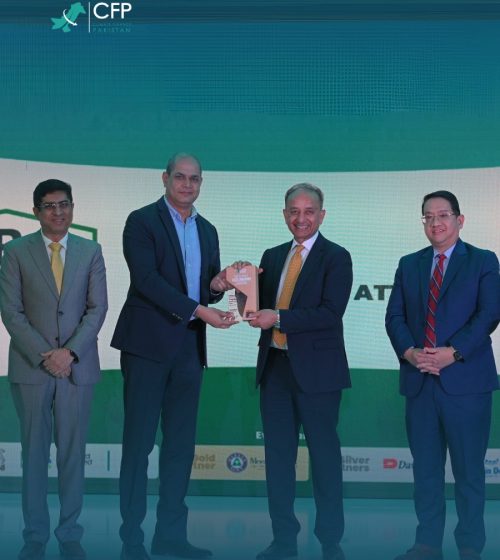
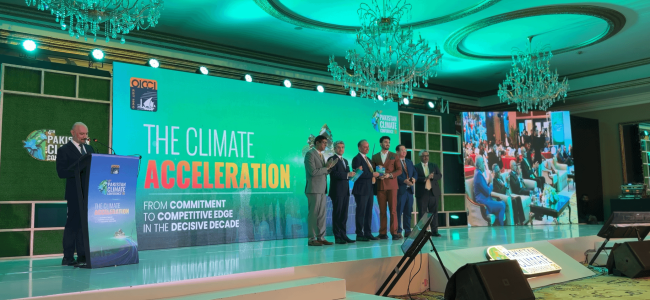
True to its commitment to encourage sustainable practices, OICCI also announced the winners of its second Climate Excellence Awards, for which CFP was its Technical Partner. These Awards recognize and celebrate the implementation of innovative and scalable sustainable initiatives by OICCI members across six categories: Climate Action, Water Stewardship & Management, Renewable Energy & Conservation, Supporting Biodiversity, Sustainable Finance & Investment, and Promoting Circular Economy.
The best performing company across these categories wins the Climate Excellence Award. This year it was claimed by Nestle.