
Floods in Pakistan: On Loop, Every Monsoon
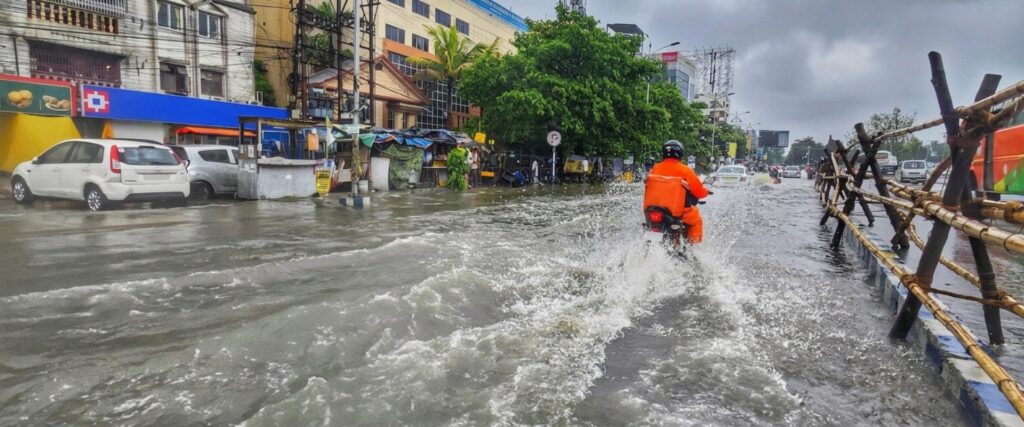
The same cities. The same news. The same “unprecedented” rainfall that somehow isn’t unprecedented. As floods in Pakistan return for another monsoon season, the pattern is becoming impossible to ignore. Since June 26, this year’s monsoon has claimed 109 lives across Pakistan. Muridke has been evacuated by boat. The Ravi and Chenab rivers are running at flood levels, and forecasters say more rain is coming. In Lahore, there were six consecutive days of rain; a level of rainfall that used to be exceptional and is starting to look routine. If this is routine, then why are we never really ready? A Pattern, Not Just a Bad Week Look back, and 2026 fits an existing trend rather than standing apart from it. Over the last four major monsoon seasons, Pakistan has lost more than 6,000 lives and seen an estimated 40 million people displaced. On average, floods now cost the country close to $2 billion a year. PMD data shows the monsoon system itself has shifted nearly 100km westward, opening up new flood-prone zones in KP, southeastern Punjab, and central Sindh. The map of who’s really at risk is actively changing, and compounding upon gaps that were never closed to begin with. This past week confirmed just that. Gujranwala recorded 245mm of rainfall, a WASA record; Sialkot saw 139mm and Lahore 123mm, with roughly 400 km underwater across Punjab. Of the 109 deaths, 55 came from KP alone. More importantly: over half of all deaths nationally came from house and roof collapses, and three people in Punjab were electrocuted in floodwater, raising concerns over the fact that this is more than the weather, it is structural safety. That’s really the point. Urban flooding in Pakistan doesn’t happen because it rains, but because of the lack of planning behind what is being built. Why is it Becoming a Problem? We are not fighting the drivers such as unplanned urbanization: roughly half of Pakistan’s population is projected to be living in cities by 2050, much of it being informal sprawl. Another example is the drainage systems themselves; the WASA networks running under Lahore, Rawalpindi, and Peshawar were designed for the rainfall patterns of decades past, not for 245mm in a week. The infrastructure is old, the weather it’s being asked to handle isn’t. And here’s the part that should be more alarming than any single number: flood hazard mapping still doesn’t exist at the scale needed, so housing schemes keep getting approved in zones nobody has properly assessed. Flood related health costs due to waterborne diseases remain uncounted. Pakistan’s own Fiscal Risk Statement names natural disasters as the country’s single biggest fiscal threat, up to 1.5% of GDP, and there’s still no disaster risk financing mechanism. Every one of these gaps has been identified before, and each year they’re identified again. That’s not to say nothing is happening. Punjab has claimed Rs. 500 billion in drainage infrastructure investment, with Rs. 10.5 billion budgeted specifically for flood control and drainage this year and Rs. 61 billion for irrigation and land reclamation. PDMA issued early warnings four days ahead; Punjab’s Chief Minister ordered full departmental mobilisation. These aren’t nothing. However, what’s lacking is an actual, well-planned and well-executed strategy. In order to free ourselves from this seemingly infinite loop, there needs to be action. Starting with mandatory flood hazard mapping before any new development is approved, so cities stop being built into their own future floods is a step in the right direction. Additionally, a real disaster risk financing mechanism needs to be set up and funded ahead of time, so response doesn’t depend on scrambling for unbudgeted money every single monsoon. Pakistan cannot control the monsoon. It can control whether the next one “catches the country off guard” in exactly the same way this one did.